



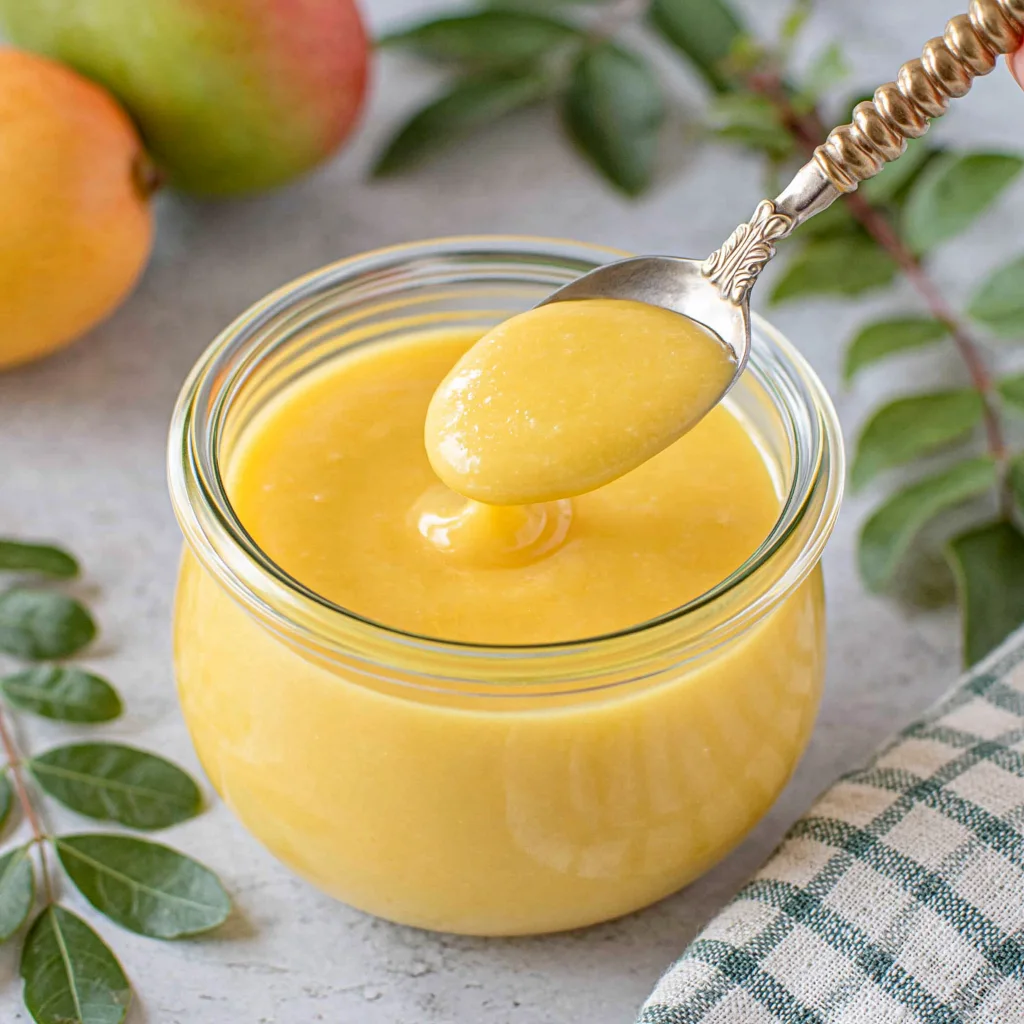
Easy Mango Curd is one of those small-batch recipes that feels a little special without asking much from you. The ingredient list is short, the steps are clear, and the finished curd gives you a smooth, rich spread with fresh mango flavor and a bright touch of lime. It works as a breakfast topping, a cake filling, or a spoonable treat when you want something creamy and fruity in the fridge.
What makes this Easy Mango Curd so appealing is the balance. Mango brings sweetness and body, while lime juice and zest keep the flavor from feeling heavy. The egg yolks give the curd its classic richness, and the butter rounds everything out into a soft, silky finish. Even though it tastes bakery-worthy, the method is very manageable at home.
This is also a good recipe for cooks who want a fruit curd that feels different from the usual lemon version. Mango gives it a warmer, fuller fruit flavor, and the bright color makes it look beautiful in a jar or spooned into desserts. Once chilled, it thickens into a creamy spread that feels smooth and luxurious without being fussy.
Why We Love This Recipe
There is a lot to like here, especially if you want a recipe that gives you a big payoff from a small amount of effort. The prep is quick, the cook time is short, and most of the work comes down to stirring patiently over low heat. You do not need a long ingredient list or advanced baking skills to get a lovely result.
Another reason this Easy Mango Curd stands out is how flexible it is. You can spread it over toast, English muffins, biscuits, or scones. It also works well spooned over yogurt, oatmeal, or pancakes when you want a fresh fruit flavor without cutting more fruit.
For baking, mango curd makes a very good filling. Use it between cake layers, pipe it into cupcakes, or swirl it into tart shells. Because it is rich and smooth, a little goes a long way, and the lime note helps it pair well with vanilla, coconut, and light cream-based desserts.
Ingredients
You only need six ingredients for this Easy Mango Curd, and each one has a clear job in the finished texture and flavor.
Mango flesh is the star of the recipe. It gives the curd its fruit flavor, color, and most of its body. Blend it well for a thinner puree, or keep it slightly thicker if you like a little more texture.
Egg yolks bring richness and help the curd thicken as it cooks. Since they are used without the whites, the final texture stays creamy and smooth.
Caster sugar sweetens the mango and lime without making the curd overly sugary. Because mango can already be quite sweet, the amount stays moderate.
Lime juice adds acidity, which sharpens the fruit flavor and keeps the curd from tasting flat.
Unsalted butter gives the curd its glossy, creamy texture. Adding it little by little helps it melt in smoothly.
Lime zest goes in at the end for a fresher citrus note. It lifts the whole recipe and keeps the mango flavor feeling bright.
How to Make Mango Curd
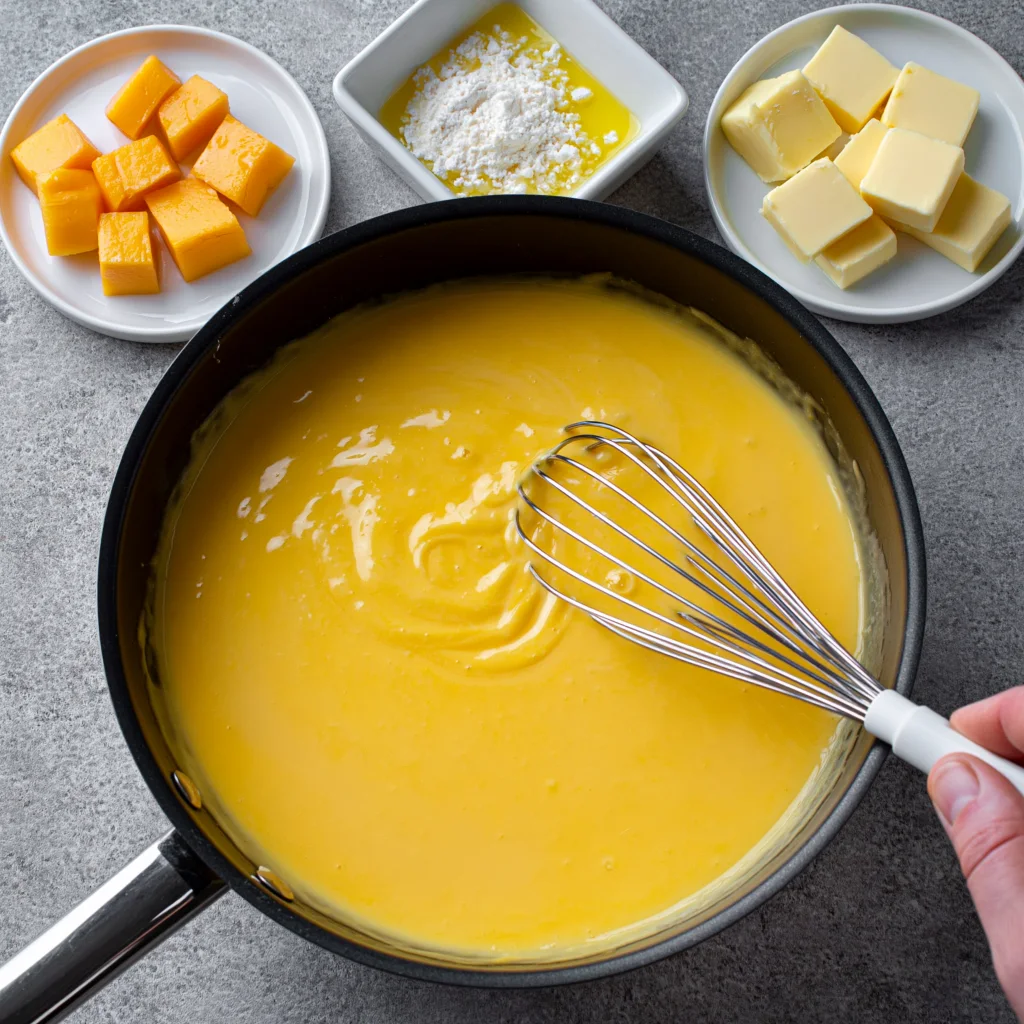
Start by preparing the mango. Remove the skin and pit, cut the flesh into cubes, and blend it into a puree. If you are using frozen mango, thaw it first and drain away extra liquid so the puree does not become watery.
Next, whisk the egg yolks and sugar together in a non-reactive, heavy-based saucepan. Add the mango puree and lime juice, stir, and place the pan on low heat. The gentle heat matters here. You want the mixture to warm slowly so the yolks thicken the curd instead of turning into scrambled bits.
Cook the mixture for a few minutes, stirring constantly with a heat-proof spatula. Once the sugar has dissolved and the base begins to thicken slightly, add the butter in small amounts. Let each addition melt fully before adding more. This slow addition helps keep the texture smooth.
After all the butter is in, keep cooking and stirring until the curd thickens enough to coat the back of a spoon or spatula. The recipe notes that it should reach about 82 degrees Celsius or 180 degrees Fahrenheit. That is the point where it has enough body to set up well once chilled.
Pour the hot curd through a fine-mesh sieve into a bowl. This step catches any lumps and gives the curd a cleaner, smoother texture. Stir in the lime zest, then transfer the curd to jars or another airtight container. Chill it for at least 2 hours, though overnight is even better for a fuller set.
Tips & Troubleshooting
The biggest key to a good Easy Mango Curd is steady, low heat. If the pan gets too hot, the egg yolks can cook too fast and leave you with a grainy or curdled texture. A simmer is fine, but a boil is too much for this recipe.
If your mango puree seems fibrous, strain it before cooking. That small extra step can make a big difference in the final texture, especially if the mango was not perfectly ripe or silky to begin with.
When adding the butter, do not rush. Small additions melt more evenly into the base and help the curd stay smooth. If you add all of it at once, the mixture can take longer to come together.
Straining the cooked curd is also worth the extra minute. Even if the curd looks smooth in the pan, the sieve will catch tiny cooked egg bits and any mango fibers that remain. If it still looks a little uneven after straining, the notes mention that an immersion blender can help smooth it out.
If a skin forms during storage, that usually happens when the top is exposed to air. The recipe notes suggest placing plastic wrap directly against the surface if you are storing the curd in containers. That simple step helps keep the top soft and glossy.
How to Use Mango Curd
This Easy Mango Curd earns a place in the fridge because it can be used in so many ways. At breakfast, it is wonderful spread on toast, English muffins, or warm biscuits. It also works well spooned over yogurt, oatmeal, or pancakes when you want a fresh fruit flavor without cutting more fruit.
For baking, mango curd makes a very good filling. Use it between cake layers, pipe it into cupcakes, or swirl it into tart shells. Because it is rich and smooth, a little goes a long way, and the lime note helps it pair well with vanilla, coconut, and light cream-based desserts.
You can also keep things simple and serve it as part of a snack board with scones, soft rolls, or crackers. The bright color makes it feel special, even when the rest of the spread is very simple.
Recipe FAQs
Can I use frozen mango?
Yes. The recipe says frozen mango works well as long as you thaw and drain it first. That helps keep the puree from being too wet.
How do I know the curd is ready?
It should thicken enough to coat the back of a spoon or spatula. The recipe also gives a target of about 82 degrees Celsius or 180 degrees Fahrenheit.
Why strain the curd?
Straining removes cooked egg bits and any mango fibers or lumps. It gives the finished curd a smoother texture.
Can I make it smoother?
Yes. Blend the mango for longer, and if you want an even silkier finish, strain the puree before cooking. The notes also mention using an immersion blender after sieving if needed.
Storing & Freezing
This Easy Mango Curd should be kept in the refrigerator in glass jars or another airtight container. Chill it for at least 2 hours before using it so it has time to set properly. According to the recipe, it keeps in the fridge for up to one week.
Freezing directions were not provided for this recipe, so the clearest storage plan is to refrigerate it and use it within that one-week window. For the best texture, keep the surface covered well during storage.
Mango Curd
Ingredients
- 200 gr Mango Flesh
- 4 large Egg Yolks at room temperature
- 40 gr Caster Sugar
- 30 ml Lime Juice about 1 lime
- 90 gr Unsalted Butter at room temperature
- 1 teaspoon Lime Zest
Instructions
- Cut the mango, remove the skin and pip. Slice the mango flesh into small cubes and place in a blender or food processor. Blend until you get a thin puree (see note 1). If using frozen mango, thaw and drain it first.
- Place the egg yolks and sugar in a non-reactive, heavy based medium saucepan. Whisk to combine then add the mango puree (optionally sieved) and lime juice. Stir then place on the stove.
- Cook for 3 to 4 minutes on low heat, constantly stirring with a heat-proof spatula. The sugar should have dissolved and the mixture should start to thicken very slightly.
- Add the cubed butter a little bit at a time, stirring until completely melted in the mixture before adding more.
- Once all the butter has been incorporated, continue to cook for about 5 to 8 minutes (more or less depending on the heat and size of saucepan). The curd should have thickened, coat the back of a spoon or spatula and reach about 82 degrees Celsius / 180 degrees Fahrenheit (see note 2).
- Place a fine-mesh sieve over a large bowl and pour the cooked mango curd in. Press the curd through the sieve and discard any lumps or bits of cooked eggs (see note 3).
- Add the lime zest and stir until just combined.
- Transfer the curd inside glass jars or airtight container (see note 4) and refrigerate for at least 2 hours, preferably overnight. The curd will set as it chills. Keep in the fridge for up to a week.
Video
Notes

- Vanilla Bean Chiffon Cake That Feels Light and Special - April 27, 2026
- Favorite Vanilla Bean Cake That Tastes Rich and Tender - April 27, 2026
- Wonderful Mulberry Olive Oil Cake - April 27, 2026