




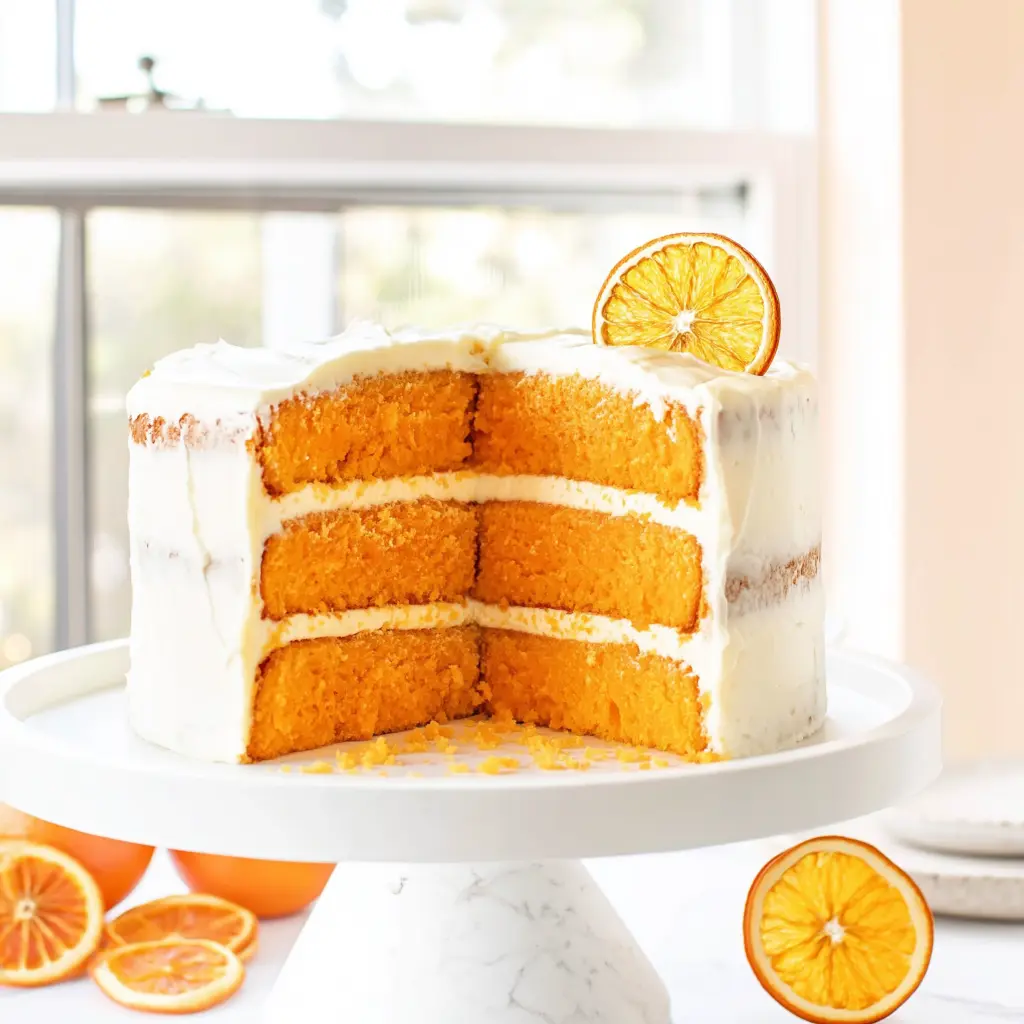
Orange cake is one of those desserts that feels bright and comforting at the same time. It has the softness people want from a layer cake, but it also has a fresh citrus flavor that keeps every bite from feeling too heavy. This version uses fresh orange juice, orange zest, sour cream, and oil, so the cake stays tender and moist while still tasting distinctly like orange. The cream cheese frosting adds richness and just enough tang to balance the sweetness.
This is also a helpful cake to keep in your back pocket when you want something that feels special without asking for difficult steps. The ingredient list is familiar, the batter comes together in a straightforward way, and the frosting is made from ingredients many home bakers already keep around. It works for birthdays, spring gatherings, weekend baking, or any time you want a cake that looks pretty on the table and slices cleanly.
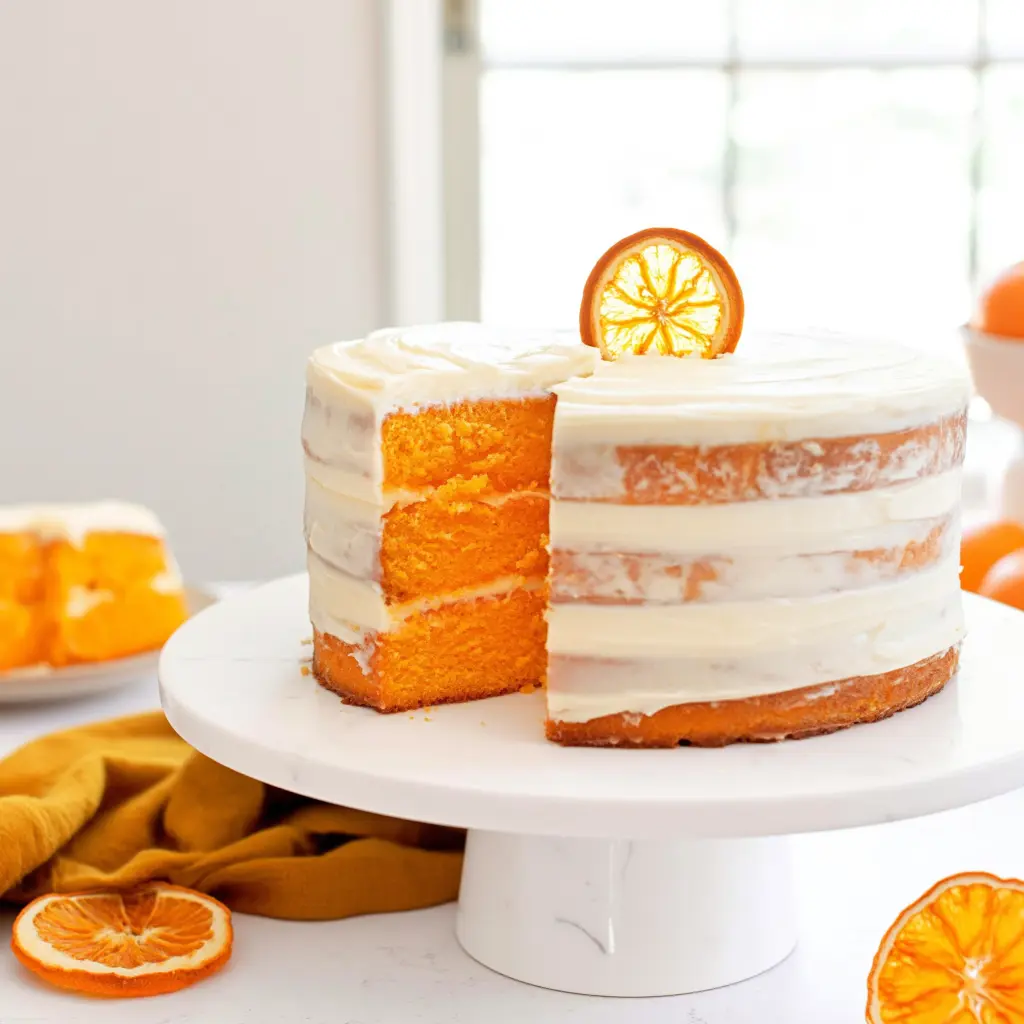
Because this recipe can be baked in either three 8-inch pans or two 9-inch pans, it gives you a bit of flexibility. You can turn it into a classic frosted layer cake, or you can leave the sides partly exposed for a more relaxed naked cake look. That style works especially well here because the orange color and creamy frosting already do a lot of the visual work. Add a few dried orange slices on top, and the cake has a finished look without needing complicated decorating skills.
The Best Orange Cake Recipe
What sets this orange cake apart is the balance between flavor and texture. Fresh orange juice gives the cake a natural citrus taste, but the sour cream and oil keep the crumb soft and rich. Some citrus cakes can drift too far into being either dense or dry. This one lands in a much friendlier place. It feels soft and plush when sliced, and it stays pleasant even after chilling.
The frosting matters just as much. Orange cream cheese frosting has enough body to hold between layers, but it is still easy to spread. The orange zest and orange juice in the frosting tie the whole cake together, so the flavor does not stop at the cake layers. That gives the finished dessert a more complete orange flavor instead of a plain frosting sitting on top of an orange cake.
This recipe is also practical. The mixing method is simple, and there is no long list of decorating steps. If you want a cake that looks polished but still feels doable, this is a strong choice.
Ingredients
The dry ingredients are flour, sugar, baking soda, baking powder, and salt. These give the cake its structure and lift. The sugar also helps the cake stay soft, which matters in a layer cake that may sit for a bit before serving.
The wet ingredients do most of the flavor work. Oil keeps the crumb moist and tender. Fresh orange juice gives the cake its citrus base, while orange zest adds the sharper orange aroma that juice alone cannot give. Eggs help bind the batter and give it body. Sour cream brings richness and softness, and it helps round out the orange flavor so the cake tastes full rather than thin.
For the frosting, butter and cream cheese create the base. Powdered sugar sweetens and thickens it, while orange zest and orange juice give it the same bright tone as the cake. It is a short ingredient list, but each piece has a clear job.
How to Make Orange Cake
Start by heating the oven to 350 degrees. Then stir together the flour, sugar, baking soda, baking powder, and salt in a large bowl. In another bowl, mix the oil, orange juice, eggs, sour cream, and orange zest until smooth. Fold the dry ingredients into the wet ingredients just until combined. That last part matters. Overmixing can make a cake less tender, so once the flour disappears into the batter, it is ready.
Grease the cake pans well before adding the batter. The recipe gives two pan options, so you can choose either three 8-inch pans or two 9-inch pans. Bake for 19 to 21 minutes, watching for the usual doneness sign: a toothpick inserted in the center should come out clean. Let the cakes cool in the pans for about 15 minutes before turning them out.
For the frosting, beat the softened butter and cream cheese until light and fluffy. Then stir in the powdered sugar, orange zest, and orange juice. Once the cake layers are fully cool, frost and stack them. If the layers are still warm, the frosting will soften too quickly and make decorating harder than it needs to be.
What is a Naked Cake?
A naked cake is a layer cake with very little frosting on the outside, or sometimes just a thin swipe that lets the cake layers show through. It has a relaxed, bakery-style look that feels polished without looking overly formal. You still frost between the layers, but the sides are not covered heavily.
This orange cake works especially well as a naked cake because the pale cake layers and creamy frosting already give plenty of contrast. The finished cake looks fresh and light, which fits the orange flavor. It is also a nice option for home bakers who do not want to spend extra time smoothing thick frosting around the sides.
Another reason people like this style is that it feels less sweet. Even if the frosting amount inside the cake stays generous, the lighter finish on the outside keeps the whole dessert from looking too heavy. That can be a nice match for a citrus cake, where the goal is often brightness rather than richness alone.
How to frost a Naked Cake
Start with fully cooled cake layers. Place the first layer on your cake stand or serving plate and spread a generous amount of orange cream cheese frosting over the top. Add the second layer and repeat. If you are using three 8-inch layers, continue the same way until all layers are stacked.
After stacking, place a small amount of frosting on the top and spread it out evenly. Then use only a thin amount around the sides. You are not trying to hide the cake. You are just filling gaps and giving the cake a soft finished look. A small offset spatula works well here, but a regular spatula can also do the job.
If the frosting feels too soft, chill the cake briefly before doing the final pass. That helps the layers stay neat and keeps crumbs from dragging through the frosting. The goal is not perfection. A naked cake usually looks nicest when it keeps a bit of softness and shape rather than a perfectly sharp finish.
How to make dried oranges to decorate a cake?
Dried orange slices are a simple decoration that suits this cake very well. They add color, reinforce the orange theme, and turn a plain frosted cake into something that looks much more finished.
Select & Slice Oranges
Choose oranges that look fresh and feel firm. Slice them thinly so they dry more evenly. Very thick slices take longer and can stay sticky in the center.
Pat Dry
Lay the slices on paper towels and pat away extra surface moisture. This helps them dry more evenly and keeps them from steaming too much at the start.
Prepare the Baking Sheet
Place the slices in a single layer on a baking sheet. Give them a little space so warm air can move around each slice.
Low-Heat Drying
Low heat works better than rushing because it helps the slices dry without darkening too fast.
Check for “Barely Dried” Texture
For cake decorating, you do not need the slices to become hard like chips. A barely dried texture often looks prettier. The slices should feel dry enough to handle but still have a little flexibility.
Cool Completely
Let the orange slices cool fully before placing them on the cake. As they cool, they firm up a bit more. Once cooled, arrange them on top of the cake in a loose cluster or around the edge.
Serving and Storage
This orange cake is lovely served chilled or at cool room temperature. If you want the frosting to feel softer, let the cake sit out briefly before slicing. It pairs nicely with coffee, tea, or fresh fruit on the side.
Because of the cream cheese frosting, leftovers should be kept covered in the refrigerator. The cake can be made ahead, which is helpful for gatherings. The orange flavor often tastes even more settled after the cake has had a little time to rest.
If you want a few more sweet ideas for later, creamy no-bake cheesecake with berries and decadent brownie sundae with ice cream both fit the same dessert-friendly mood.
This is the kind of cake that looks cheerful, slices well, and feels right for many occasions. It is citrusy, soft, and practical enough for a home baker, which is exactly what makes it worth making.

- Vanilla Bean Chiffon Cake That Feels Light and Special - April 27, 2026
- Favorite Vanilla Bean Cake That Tastes Rich and Tender - April 27, 2026
- Wonderful Mulberry Olive Oil Cake - April 27, 2026