




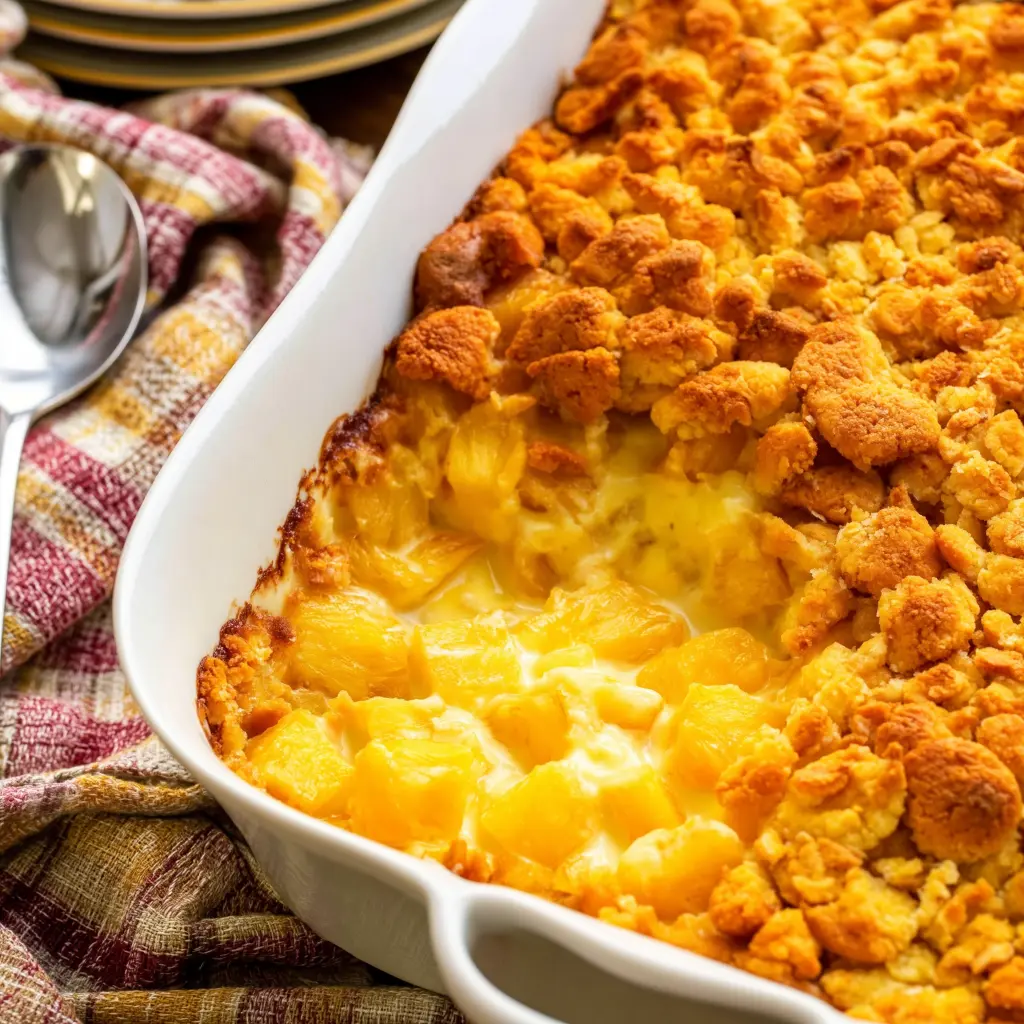
Pineapple and cheese casserole is one of those classic dishes that catches people off guard at first and then wins them over once it reaches the table. It blends sweet pineapple, sharp cheddar, and a buttery cracker topping into something that can sit beside a holiday ham just as easily as it can show up on a dessert table. The combination is unusual, but it works.
The appeal of pineapple and cheese casserole comes from contrast. The fruit is juicy and sweet, the cheddar adds salt and depth, and the cracker topping brings a crisp, buttery finish. Each part matters, and once they bake together, the final dish tastes balanced rather than random.
This is also a very practical casserole. It uses canned pineapple, pantry flour and sugar, a familiar cheese, and a cracker topping that takes only a minute to mix together. There is no complicated method to learn, and it fits well for family meals, potlucks, and holiday spreads.
Because this casserole can be served warm, room temperature, or chilled, it is especially helpful when you need a recipe that can flex around the rest of the menu. It holds well, slices or spoons easily, and still tastes good later in the day. That kind of flexibility is part of what has kept pineapple and cheese casserole around for so long.
Pineapple Casserole
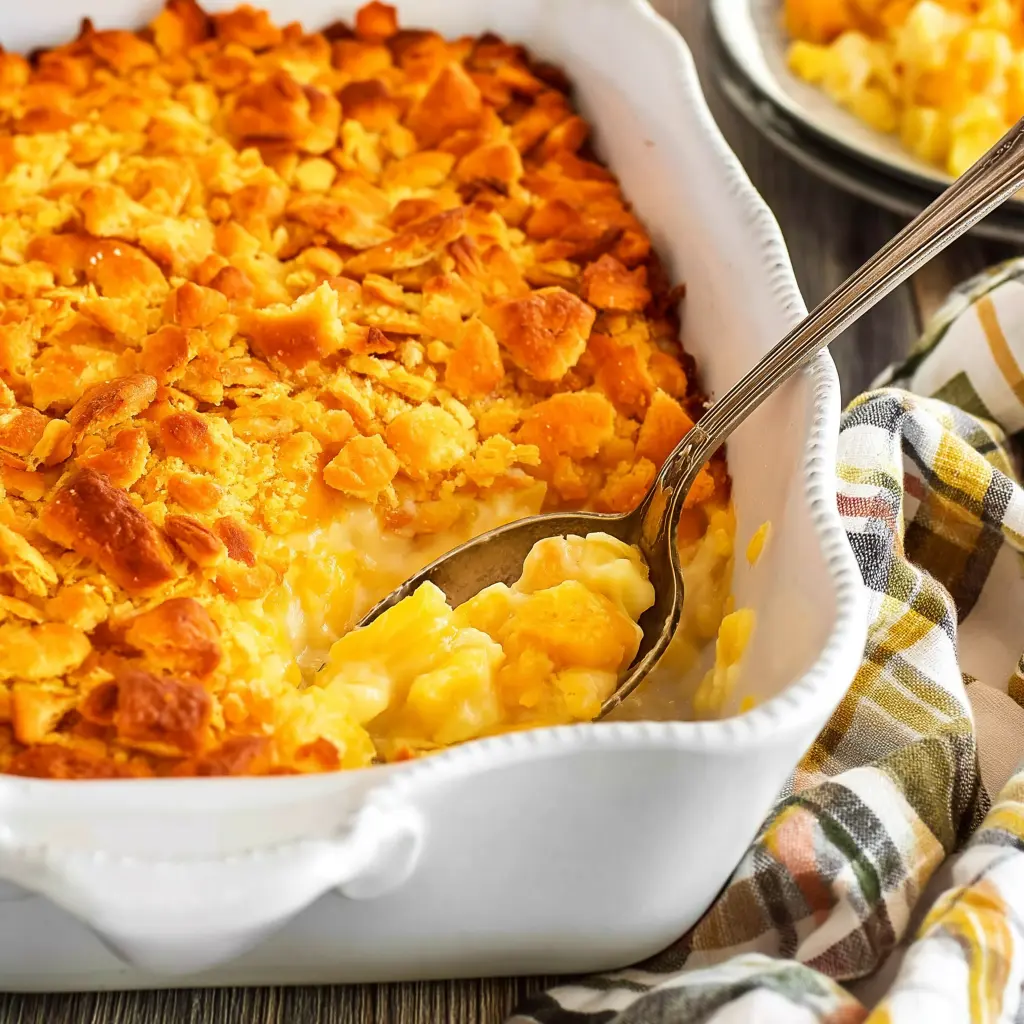
Pineapple casserole sits in that interesting space between side dish and dessert. It is sweet enough to satisfy anyone who likes baked fruit dishes, but the cheddar and cracker topping give it a savory edge that makes it feel right at home next to baked meats and holiday mains.
That sweet-savory balance is what gives the dish its personality. The pineapple keeps the filling soft and bright, while the flour and sugar help create a lightly thickened base as it bakes. The cheese melts into that mixture and adds richness without turning the dish into a standard cheese casserole.
For many readers, pineapple and cheese casserole is the kind of recipe that brings back family gatherings. For others, it may be completely new. Either way, it is approachable. The steps are straightforward, the ingredients are easy to find, and the finished dish stands out on the table without asking for much effort, much like other familiar sweets such as this banana pudding parfait.
Ingredients
The pineapple is the heart of the recipe, and using both crushed pineapple and pineapple tidbits or chunks gives the filling a better texture. The crushed pineapple helps create a softer base, while the larger pieces keep the casserole from feeling too uniform. Draining both cans is important, though holding back some of the juice for the topping gives you the flavor you still want.
Sugar and flour work together in the filling. The sugar adds sweetness, while the flour helps absorb some of the pineapple moisture during baking. That keeps the casserole from turning too loose.
Sharp cheddar is a key ingredient here. A milder cheese would melt in, but it would not give you the same contrast against the sweet fruit. Sharp cheddar has enough flavor to hold its place, and that is part of what makes pineapple and cheese casserole memorable.
The topping uses butter crackers, reserved pineapple juice, and melted butter. Once mixed, it bakes into a golden, crisp layer that adds the right finishing texture. Without that topping, the casserole would still taste good, but it would miss the buttery crunch that makes the dish feel finished.
How to Bake It
Start by preheating your oven to 350°F and preparing a medium casserole dish. A lightly buttered or sprayed dish helps with serving later and keeps the edges from sticking too much as the sugar in the filling bakes.
In a large bowl, whisk together the sugar and flour first. That small step helps the flour spread more evenly through the pineapple mixture. Stir in the shredded cheddar until it is coated with the dry mixture, then add the drained pineapple. Mix until everything is combined well and spread it into the prepared dish.
In a separate bowl, stir together the cracker crumbs, reserved pineapple juice, and melted butter. The mixture should feel moist enough to hold together in clumps, but it should still scatter across the top easily. Sprinkle it evenly over the casserole so you get coverage from edge to edge.
Bake the casserole for 30 to 40 minutes, until the top is golden brown and the filling is hot. The center should look set but still soft. Let it rest for 5 to 10 minutes before serving. That brief resting time helps the filling settle and makes it easier to spoon.
Why You Will Love This Recipe for Pineapple Casserole!
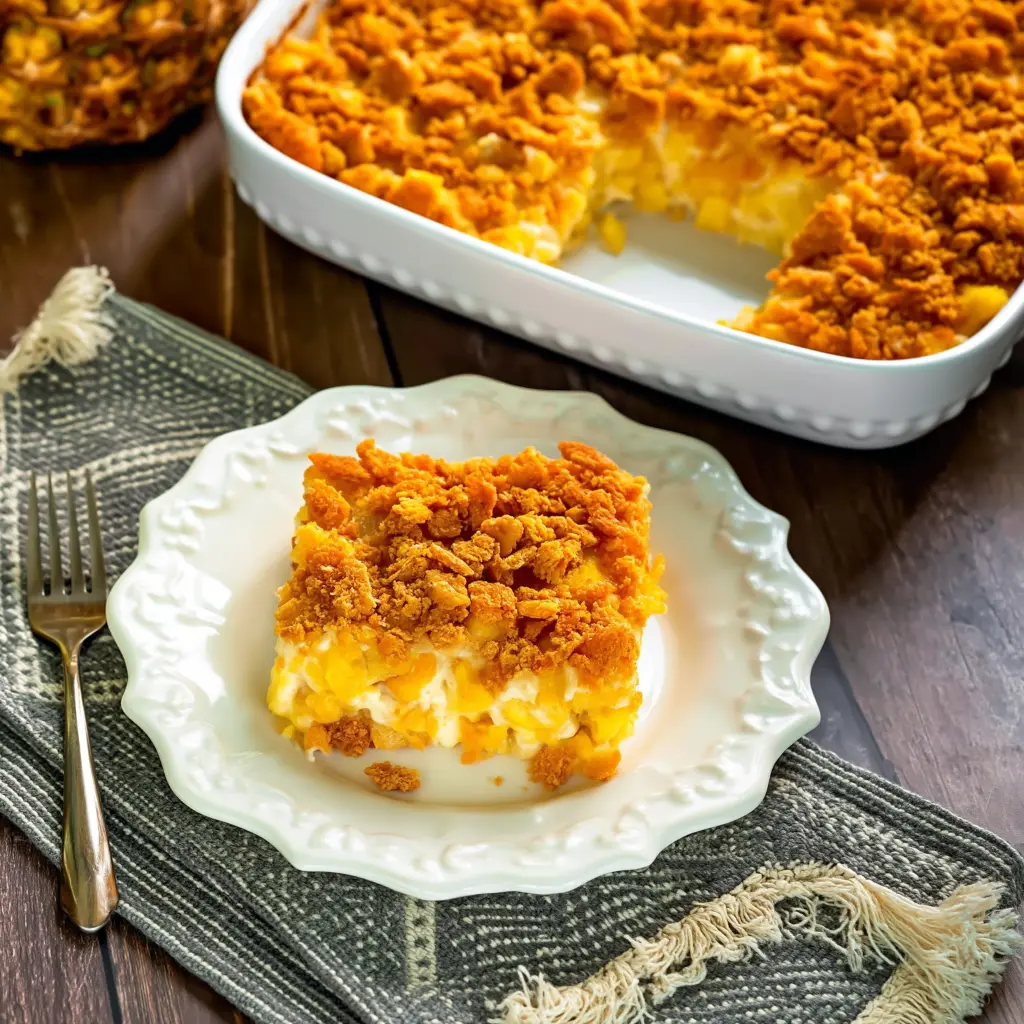
One reason this recipe stands out is that it feels familiar and surprising at the same time. The ingredients are easy to recognize, but the final flavor is more interesting than you might expect from such a short list.
It is also a good recipe for gatherings because it scales well on a buffet or dinner table. You can serve pineapple and cheese casserole with a savory meal, and it still fits. You can also set it out with other sweet dishes, and it still makes sense there too.
Another strong point is that it does not require delicate timing once it comes out of the oven. Warm is lovely, but room temperature works too. That makes the dish much easier to fit into a larger cooking plan, especially during holidays when oven space and timing can feel crowded.
This casserole also has a texture contrast that keeps every bite interesting. The fruit filling is soft and rich, while the topping stays buttery and crisp around the edges. A few small details make a big difference here, and that topping is one of them.
What to Serve with Pineapple Cheese Casserole
Pineapple and cheese casserole is often served with baked ham, roasted turkey, or pork. The sweet pineapple pairs naturally with salty, savory meats and helps round out a heavier plate.
It also works beside simpler mains such as roast chicken or baked pork chops. Since the casserole brings sweetness, cheese, and crunch in one dish, the rest of the meal can stay fairly straightforward. A green vegetable on the side, such as green beans or a salad, adds balance.
If you want to serve it in a more dessert-like way, a smaller portion after dinner works well too. In that case, the casserole is rich enough to stand on its own without much else on the plate, especially on a menu that already includes something like a creamy cheesecake dessert or a warm chocolate lava cake.
Storage and Make-Ahead Tips
Leftover pineapple and cheese casserole can be covered and refrigerated for up to 3 days. The topping softens some as it sits, but the flavor stays pleasant. Reheat it in the oven when possible if you want to bring back more of that crisp top.
This dish can also be assembled ahead of time. You can prepare the pineapple filling, spread it in the dish, and hold the topping separately until closer to baking. Adding the topping later helps it keep a better texture in the oven.
If you serve leftovers cold or at room temperature, the casserole still works. That flexibility is one of the reasons readers return to pineapple and cheese casserole for gatherings and holiday meals.
Common Questions
A common question is whether fresh pineapple can be used. Since this recipe is written around canned pineapple and its texture, sticking with the canned version is the better choice for a predictable result.
Another question is whether mild cheddar can replace sharp cheddar. It can, but the dish loses some contrast. Sharp cheddar gives pineapple and cheese casserole its distinctive sweet-salty edge.
Readers also often ask whether the dish is more of a side or dessert. The honest answer is that it can be either. That is part of its charm, and it is one reason the recipe stays popular with families who like dishes that do not fit neatly into one category.

- Vanilla Bean Chiffon Cake That Feels Light and Special - April 27, 2026
- Favorite Vanilla Bean Cake That Tastes Rich and Tender - April 27, 2026
- Wonderful Mulberry Olive Oil Cake - April 27, 2026