



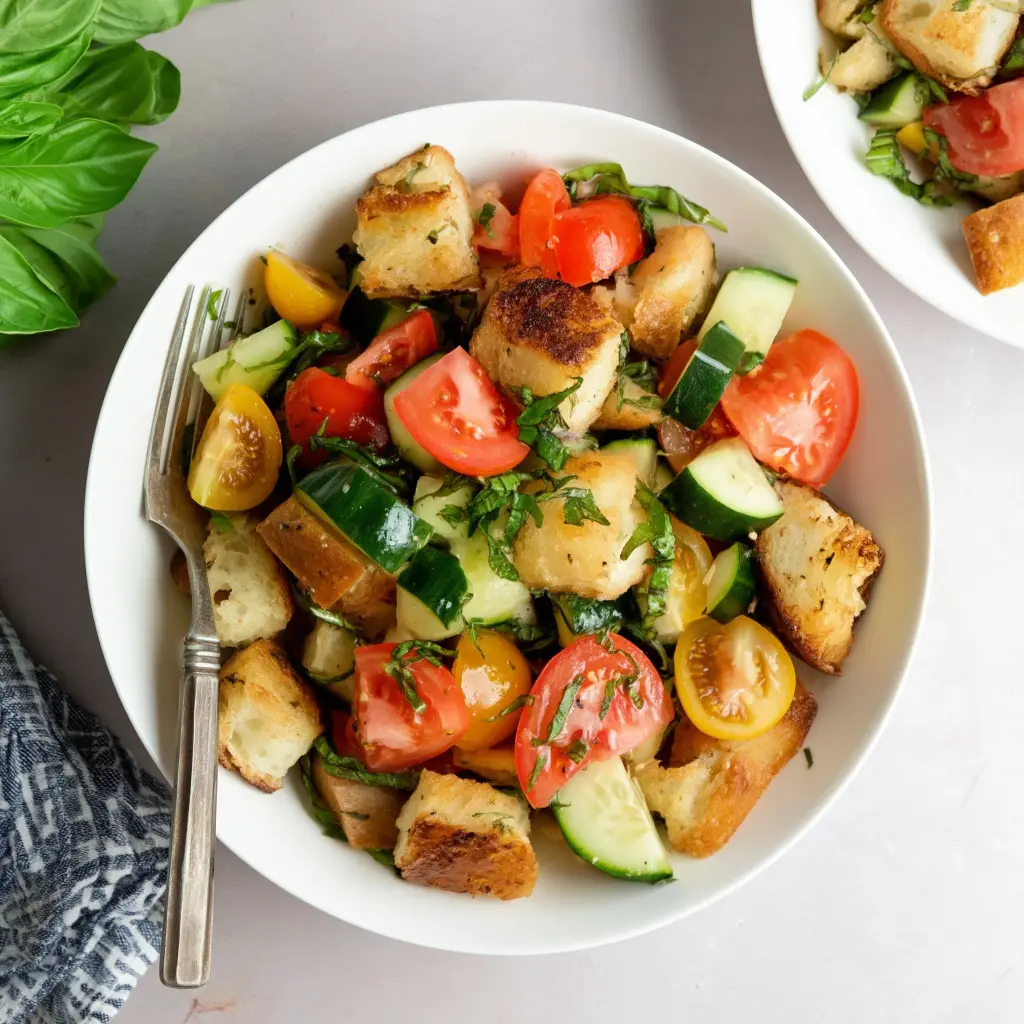
Classic panzanella salad is a strong example of how a few simple ingredients can turn into something far more satisfying than the sum of their parts. Tomatoes, bread, cucumber, basil, capers, shallots, and a sharp dressing do not sound complicated, but when they come together in the right order, the salad has freshness, richness, texture, and real depth.
What makes panzanella so appealing is the contrast. The tomatoes soften and release their juices, the toasted bread drinks up the dressing without turning to mush, and the basil keeps the whole bowl lively. This is the kind of salad that feels substantial enough to serve as a light meal, but it also works beautifully as a side for a bigger spread.
What is panzanella?
Panzanella is a bread salad built around ripe tomatoes and sturdy bread. The bread is not there as an afterthought. It is one of the main parts of the dish, and its job is to soak up the juices and dressing while still keeping some bite.
That balance is what makes the salad memorable. If the bread stays too dry, the salad feels disjointed. If it sits too long or the bread is too soft to begin with, the bowl loses its structure. The best panzanella has bread that is soaked with flavor around the edges but still has some chew in the center.
This version follows that idea closely. The tomatoes are salted first so they start releasing liquid, the bread is toasted with olive oil and garlic, and the whole salad rests after dressing so the ingredients have time to settle together.
Ingredients
The ingredients are straightforward, but each one has a clear role.
Tomatoes are the heart of the salad, so their flavor matters. They bring sweetness, acidity, and juices that coat the bread and shape the whole bowl. Salting them early is a useful step because it draws out liquid that later helps season the salad more deeply.
Crusty bread is the backbone. Since it is cut into cubes and toasted, it gives the salad body and texture. Bread with some structure is a better fit than anything too soft.
Garlic and olive oil coat the bread before toasting, which gives it flavor from the start. Shallots or red onion bring bite, cucumber adds crunch and freshness, and capers add little bursts of briny contrast. Basil softens the sharper notes and gives the salad its fragrant finish.
The dressing is simple but balanced. Dijon mustard helps bind it, balsamic vinegar brings tang, honey rounds the sharper edges, and the oil gives the dressing enough body to coat the bread and vegetables well. Optional basil leaves, feta, or Parmesan on top can shift the final feel slightly, but the salad works well without them too.
How to Make
Begin by heating the oven to 350°F / 180°C and lining a baking tray with parchment paper. That keeps the bread from sticking and makes cleanup easier.
Cut the tomatoes into cubes and place them in a bowl. If you are using cherry tomatoes, halve them. Sprinkle the tomatoes with sea salt, mix, and let them sit for at least 15 minutes. This short rest matters because it starts pulling out flavorful juices that later help season the salad.
Place the cubed bread in a large bowl, drizzle it with olive oil, add the minced garlic, and toss well. Spread the bread on the lined tray and toast for 15 to 20 minutes. Let it cool before adding it back to a large bowl.
Slice the shallots or onion, cut the cucumber, chop the capers, and tear or slice the basil. Make the dressing by whisking together the Dijon mustard, balsamic vinegar, and honey, then drizzling in the oil. Season with salt and pepper to taste.
Add the tomatoes to the cooled bread, then add the cucumber, shallots, capers, and basil. Toss to combine. Pour over the dressing and toss again until the bread is coated. Cover and let the salad rest for 20 to 30 minutes before serving.
Why the resting step matters
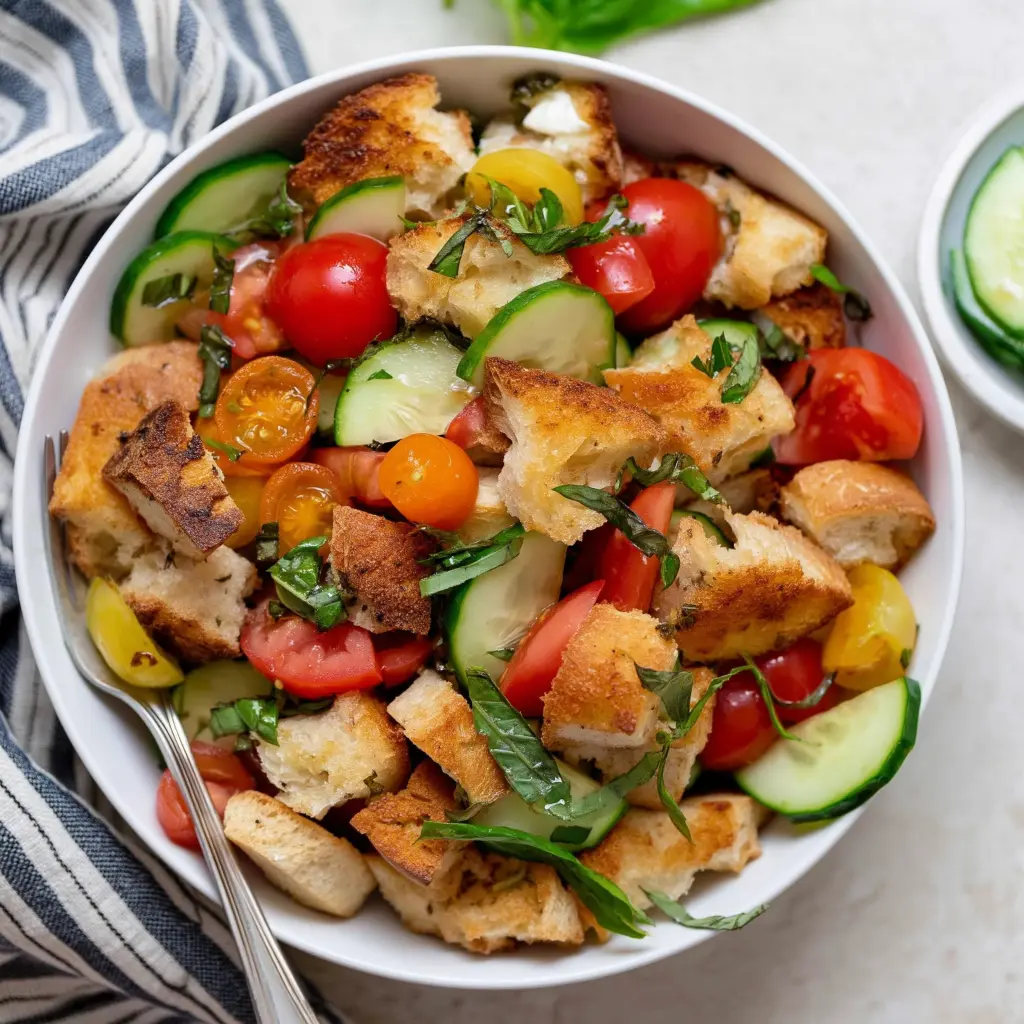
The final rest is where panzanella turns from a bowl of separate parts into a finished salad. It gives the bread enough time to absorb the dressing and tomato juices, but not so much time that everything goes flat.
That rest also helps the sharper ingredients settle. The shallots soften a bit, the basil spreads through the bowl, and the dressing has time to coat the bread evenly.
Tips for the best texture
The main texture goal is balance. You want bread that is toasted enough to hold up, but not so dark that it stays hard in the center after resting.
Tomatoes should be ripe enough to release juice when salted. If they are under-ripe, the salad can still work, but it may not have the same depth or softness.
Cutting the vegetables into pieces that feel comfortable on the fork also helps. Large chunks can make the salad harder to toss evenly, while very tiny cuts can make it feel more chopped than composed.
It also helps not to drown the bowl in dressing all at once. Add it with intention and toss well. The tomato juices will keep adding moisture as the salad sits.
Variations to the panzanella salad
This recipe already gives you a classic path, but there is room for small shifts.
You can use shallots for a milder finish or red onion if you want a bit more bite. Both fit the salad well.
For serving, the optional feta or Parmesan changes the mood of the bowl slightly. Feta makes it feel saltier and creamier, while shaved Parmesan adds a firmer savory note.
The oil in the dressing can also shift depending on what you have. Extra virgin olive oil gives the most traditional feel, while avocado oil or another neutral oil makes the dressing a bit more understated.
The key is keeping the structure of the salad intact: ripe tomatoes, toasted bread, fresh herbs, and enough resting time for the bowl to come together.
Serving suggestions
Classic panzanella salad works well as a light lunch because it already has enough substance from the bread to feel filling. It also fits nicely next to simple grilled or roasted mains when you want a fresh contrast on the table.
Because it is rich in tomato flavor and has a sturdy texture, it tends to pair best with straightforward dishes rather than heavy sides. It can also sit at the center of a casual summer-style meal with very little else needed.
If using the optional basil or cheese on top, add it close to serving so the final bowl still feels fresh and lively.
Storage
Panzanella is at its best after its short resting period and before it sits too long. That is when the bread has absorbed flavor but still keeps some structure.
If you do have leftovers, store them covered in the refrigerator. The bread will soften more as it sits, so the texture will be different the next day, though the flavor can still be pleasant.
This is not the kind of salad that benefits from long storage, but it does reward thoughtful timing. Toast the bread, salt the tomatoes, mix the dressing, and let the bowl rest just enough. That simple sequence is what gives classic panzanella salad its full character.

- Vanilla Bean Chiffon Cake That Feels Light and Special - April 27, 2026
- Favorite Vanilla Bean Cake That Tastes Rich and Tender - April 27, 2026
- Wonderful Mulberry Olive Oil Cake - April 27, 2026